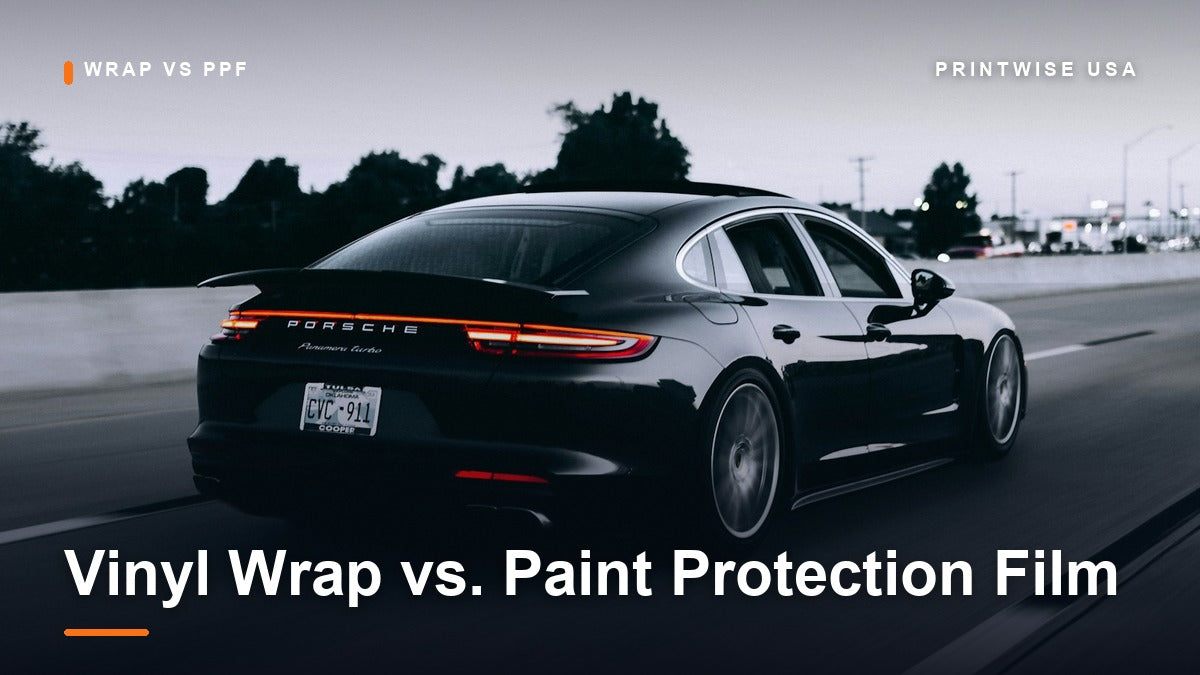
Vinyl Wrap vs. Paint Protection Film (PPF): What US Vehicle Owners Need to Know in 2026
Walk into any wrap shop or detailing studio across the United States in 2026 and you will hear the same two words over and over: wrap and PPF. Both are thin films applied over factory paint. Both promise to protect your investment. Both cost real money. And yet they do almost opposite jobs.
This guide breaks down the difference between a printed cast vinyl wrap film and paint protection film, explains who each one is actually for, and helps fleet owners, dealerships, and everyday drivers nationwide choose without wasting a dollar.
The Short Version: One Changes the Look, One Protects the Surface
A vinyl wrap is a design layer. It changes your vehicle's color, finish, or branding — from gloss black to satin military green, from a plain white cargo van to a rolling billboard for your business.
Paint protection film is an invisible armor layer. It is clear (or nearly clear), thick, self-healing urethane that absorbs rock chips, bug acids, and road debris. It does not change how your vehicle looks — it keeps the paint underneath looking new.
- Vinyl wrap: cosmetic and promotional. Available in hundreds of colors, prints, and textures.
- PPF: sacrificial protection. Almost always clear, sometimes satin or matte finish variants.
- Typical wrap thickness: 2–4 mil. Typical PPF thickness: 8 mil, often with a clear coat top layer.
- Wrap lifespan: 3–7 years depending on film quality and sun exposure. PPF lifespan: 7–10 years with a warranty from most premium brands.
What a Vinyl Wrap Actually Does for You
For businesses, the math is simple: a wrapped vehicle is a moving advertisement that thousands of people see every day on interstates, county roads, and city streets from coast to coast. Nationwide, fleet branding remains one of the lowest cost-per-impression marketing channels available to a small business.
A quality cast film such as Avery Dennison MPI 1105 Easy Apply RS conforms into deep recesses, curves, and rivets without lifting, which is why it is the workhorse for commercial fleets. For premium color-change work, 3M IJ180MC-120 metallic film delivers a depth of finish that paint shops struggle to match at the same price.
And here is the practical advantage people often miss: when the wrap comes off, the factory paint underneath is usually in better shape than the paint on an unwrapped vehicle — no UV fading, no stone chips, no oxidation. If you are still weighing that question, our breakdown of whether vehicle wraps damage paint covers it in detail.

Avery Dennison MPI 1105 Easy Apply RS cast vinyl wrap film roll used for color change and fleet wraps
What PPF Actually Does for You
PPF lives on the high-impact zones: front bumper, hood leading edge, fenders, mirror caps, headlights, rocker panels, and the rear bumper load area. On a new $60,000 truck or a low-slung sports car, those areas take the beating.
The film is designed to be damaged so your paint is not. Modern top-tier PPF is elastomeric — small swirls and light scratches disappear with heat from the sun or warm water. That self-healing property is the single biggest reason PPF commands a premium price.
What PPF does not do is make your vehicle stand out. It is invisible by design. If your goal is branding, PPF is the wrong tool.
Head-to-Head Comparison for US Buyers
- Primary purpose: Wrap = appearance and advertising. PPF = physical impact protection.
- Coverage: Wrap = full vehicle. PPF = usually partial (front end) or full body at a much higher cost.
- Installation difficulty: Wrap requires design, printing, and skilled squeegee work. PPF requires precision plotting and slip-solution technique with almost zero margin for error.
- Reversibility: Both are removable. Wrap is easier and cheaper to remove and redo.
- Repairability: A damaged wrap panel can be reprinted and replaced individually. A damaged PPF panel must be stripped and re-applied.
- Cost: A full color-change wrap typically runs a fraction of a full-body PPF install. For current nationwide numbers, see our 2026 vehicle wrap pricing guide.
Can You Combine Them? Yes — and Most Serious Builds Do
The professional answer in 2026 is not "wrap or PPF." It is "PPF first, wrap second" — or a hybrid approach:
- PPF on impact zones, wrap everywhere else. Protect the front clip, then brand the doors and box panels. This is the most common fleet setup.
- PPF under a printed wrap. On high-value vehicles, a clear PPF layer goes on the paint first, then the wrap over it. The paint stays pristine and the wrap still delivers the design.
- Wrap on top of nothing, PPF on top of wrap. Not recommended. Adhesion and removal get messy, and most film manufacturers will not warrant it.
If you are planning a full installation yourself, our step-by-step vehicle wrap guide walks through surface prep, panel sequencing, and post-heating — the same prep discipline PPF installers use.

3M IJ180MC-120 metallic printable vinyl wrap film with gloss lamination for premium vehicle finishes
Which One Should You Buy? A Simple Decision Framework
Ask yourself three questions:
- Do I need people to see my business? Then you need a wrap. A Printwise sample pack lets you feel the finishes before committing to a full roll.
- Is this a new or high-value vehicle I plan to keep 7+ years? Then PPF on the front end is money well spent.
- Am I leasing, or do I want to change color every few years? Then a removable cast wrap is the smarter, more flexible choice.
Color accuracy matters in either case. Mismatched brand colors are the number one complaint we hear from nationwide customers, which is why we recommend working from a physical Pantone color chart rather than a screen preview. If your logo file is a low-resolution JPEG, start with our logo vectorization service so the printed wrap stays sharp at full vehicle scale.
Material Notes for Shops and Fleets
Not all film behaves the same way in every climate. In the desert Southwest, UV and heat push film to its limits. In the Northeast, road salt and freeze-thaw cycles attack edges and seams. In the humid Southeast, adhesive outgassing and mold under edges become real risks.
That is why we stock films with proven track records in demanding conditions: Avery MPI 1105 for reliable conformability, 3M IJ180MC-120 for premium metallic finishes, and high-tack options such as Substance Ultracurve X1 for low-energy and textured surfaces where standard adhesives fail.
Browse the full range of Printwise wrap films and print media to compare specifications side by side.
The Bottom Line
Vinyl wrap and paint protection film are not competitors — they solve different problems. A wrap changes what your vehicle says. PPF decides how long the metal underneath stays perfect. If you run a business, the wrap pays for itself in impressions. If you own something you plan to keep, the PPF protects resale value.
Most US drivers who ask us this question end up doing both, in the right order, on the right panels. Start with a clear goal, choose a film rated for your climate, and the rest is installation discipline.